
Asbestos Testing Before Water Damage Tear-Out in Maricopa County
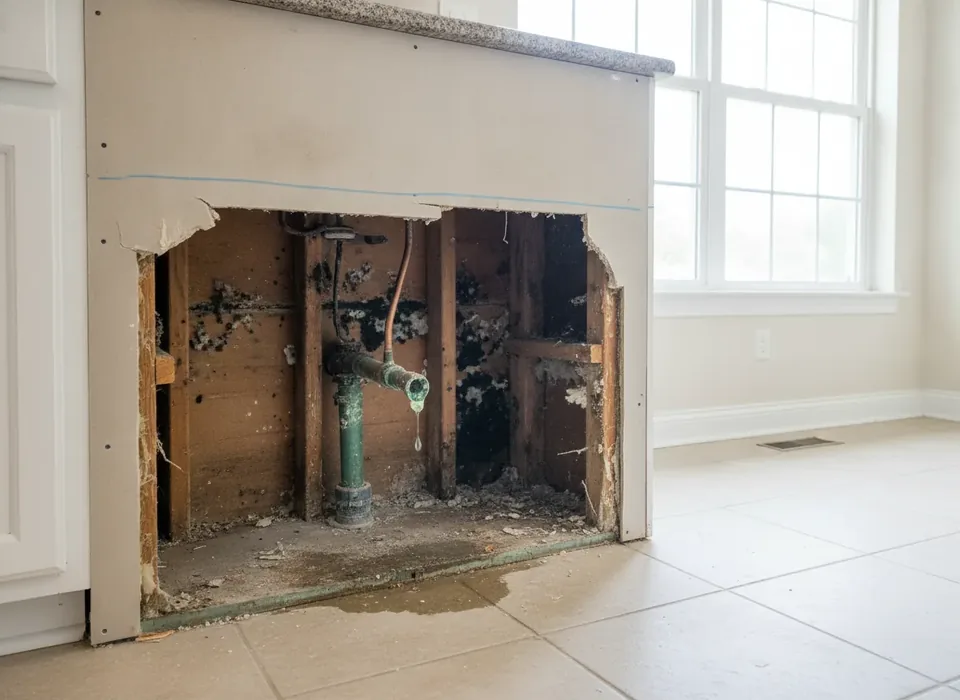
Water damage often means cutting out wet drywall, pulling up flooring, or taking down a soaked ceiling. In homes built before the mid-1980s, some of those materials may contain asbestos. Disturbing them without knowing can release fibers into the air of the house you live in. In Maricopa County there are also rules about when a survey and notice are required before the work starts.
This guide explains the basics of Maricopa County's Rule 370, the owner-occupied exemption, why rentals are different, and how San Tan Valley's rules run through Pinal County instead. It is general information. For your project, the county air quality agency and a certified inspector are the people to ask.
Which East Valley homes are most likely to have asbestos?
Age is the main clue. Census survey data (ACS 2020–2024) shows that Tempe has the oldest housing in the area: about 17% built before 1970, 24% in the 1970s and 22% in the 1980s. Mesa is close behind, with about 10% pre-1970, 19% from the 1970s and 24% from the 1980s. Chandler is younger, with a median year built of 1997, but about 20% of its homes date from the 1980s. Parts of Ahwatukee and Sun Lakes also have 1970s and 1980s homes.
Materials in homes of that era that can contain asbestos include textured "popcorn" ceilings, drywall joint compound and some wall textures, older vinyl floor tiles and sheet flooring, and the adhesive (mastic) under them. Newer homes are much less likely to have it, but age alone does not prove a material is clean. Only a lab test does. In regulatory terms, a material with more than 1% asbestos counts as asbestos-containing material (ACM).
What is Maricopa County Rule 370?
Maricopa County Air Quality Department (MCAQD) Rule 370 adopts the federal asbestos NESHAP standards locally. For renovation and demolition projects that the rule regulates, the key requirements are:
- An asbestos inspection by an AHERA-certified inspector, done within the past year, before work begins.
- Online notification to MCAQD at least 10 working days before regulated work starts.
- A notification fee, which the county's asbestos handbook lists as starting at $600 for regulated projects.
The county's details, forms and contact information are on the MCAQD Rule 370 page. The department's planning contact is AQPlanning@maricopa.gov, 602-506-6010.
The owner-occupied home exemption
Rule 370 exempts a single owner-occupied residential parcel with four or fewer dwelling units. In plain terms, if you own the house and live in it, the county's survey-and-notice requirements generally do not apply to renovation work on it.
Two cautions:
- Exempt from notice is not the same as safe. The fibers do not care who owns the house. If an older ceiling or floor is going to be cut, sanded or torn out, many homeowners and contractors test first anyway, because the people breathing the dust are the family living there and the crew doing the work.
- Contractors have their own obligations. Worker-safety rules apply to the company doing the tear-out regardless of the county exemption. Many restoration companies take samples routinely on older homes for that reason.
Rentals and landlords: the exemption may not apply
The exemption is for owner-occupied homes. A rental property may not qualify, which means a survey and notice may be needed before regulated renovation work, including water damage tear-out. That matters in Tempe, where only about 42% of homes are owner-occupied, and anywhere an investor owns the house. Landlords should confirm with MCAQD before demolition starts, and tenants dealing with a leak should report it to the landlord in writing rather than opening walls themselves.
Asbestos and an active leak: the order of operations
Stop the water, extract it, and start drying the room. Removing standing water and running air movers and dehumidifiers generally does not disturb walls or ceilings. Before anyone cuts drywall, scrapes a ceiling or pulls old flooring in a pre-1985 home, ask whether samples should be taken first. Don't sand, scrape or break suspect material yourself while you wait.
San Tan Valley and Pinal County
San Tan Valley sits in Pinal County, so Maricopa County's rule does not apply there. Asbestos questions go to the Pinal County Air Quality Control District in Florence, (520) 866-6960. Pinal's published summary says notice is required for projects at or above 260 linear feet of pipe, 160 square feet, or 35 cubic feet of regulated asbestos material. San Tan Valley incorporated as a town in 2025 and took over county services on July 1, 2026, but air quality and asbestos rules still run through the Pinal County district. Most San Tan Valley homes were built after 2000, so asbestos is less likely there, but older outbuildings and manufactured homes deserve a question. The San Tan Valley page has more local detail.
How testing usually works
Sampling
A certified inspector, or a restoration company working with one, takes small samples of the materials that will be disturbed: ceiling texture, joint compound, flooring and mastic.
Lab analysis
The samples go to a lab. Turnaround varies, and rush service is often available for an extra fee. Ask for the timeline when you schedule.
Results and plan
If the results are negative, tear-out proceeds normally. If they are positive, the removal is handled with containment by a qualified abatement company, and, where the project is regulated, the county notice period applies.
Drying continues
Drying equipment can usually keep running in the meantime, which limits the damage while you wait.
Does this change the cost?
Testing and any abatement are separate line items from water extraction and drying. The Chandler cost guide covers typical restoration ranges, and you should ask each company to list testing separately on its quote. Whether insurance pays for testing or abatement depends on your policy. Ask your adjuster, and keep the lab report with your claim file.
Choosing a company for an older home
- Ask whether the company tests before tear-out in homes built before the mid-1980s, and who does the sampling.
- Ask how the company handles a positive result, and who does the abatement.
- Verify the rebuild contractor's license at the Arizona Registrar of Contractors. Look for "ROC" and a license number on the bid.
- If mold is also a concern, see mold after water damage. Many companies handle both questions in the same visit.
The restoration process page shows where testing fits in a typical job. When you're ready, describe the damage, the home's age and whether it is a rental on the free quote form. Independent restoration companies serving Tempe, Mesa and the rest of the East Valley will reply.
Questions people ask
Do I need an asbestos test before removing water-damaged drywall in Maricopa County?
For a single owner-occupied home with four or fewer units, Rule 370's survey-and-notice requirements generally do not apply. Rentals and other regulated projects may need an AHERA inspection and 10 working days' notice. Testing older materials is still wise for health reasons.
What year homes in Arizona have asbestos?
Homes built before the mid-1980s are the most likely to contain asbestos in ceiling texture, joint compound or flooring. Only a lab test can confirm it.
Who handles asbestos rules in San Tan Valley?
The Pinal County Air Quality Control District in Florence, (520) 866-6960, not Maricopa County.
Can drying start before asbestos results come back?
Usually, yes. Extraction and drying equipment generally do not disturb walls or ceilings. Cutting, scraping or sanding suspect material should wait for results.