Why is the price range for water damage so wide?
Three things multiply each other: how much area is wet, how dirty the water is, and how long it sat. A small clean-water spill dried the same day may be a few hundred dollars. The same spill left for days can mean drywall tear-out, new flooring and mold treatment. Class 4 losses, where water soaks into concrete or hardwood, can pass $20,000.
Does a slab leak cost more than other water damage?
Usually, because there are two bills. A plumber charges about $100 to $400 to locate the leak and roughly $1,000 to $4,000 to repair it, more for a reroute. The restoration company then charges separately to dry the slab, remove wet flooring and baseboards, and dry the walls. Ask each for a separate, itemized estimate.
Will my insurance pay for water damage restoration in Arizona?
Sudden and accidental losses, like a burst supply line or a failed water heater, are usually covered, minus your policy's deductible. Gradual leaks and flood from rising surface water are commonly excluded. Many policies cover the resulting damage but not fixing the pipe itself. Confirm with your adjuster before major work starts, and keep every receipt.
Is it cheaper to dry out water damage myself?
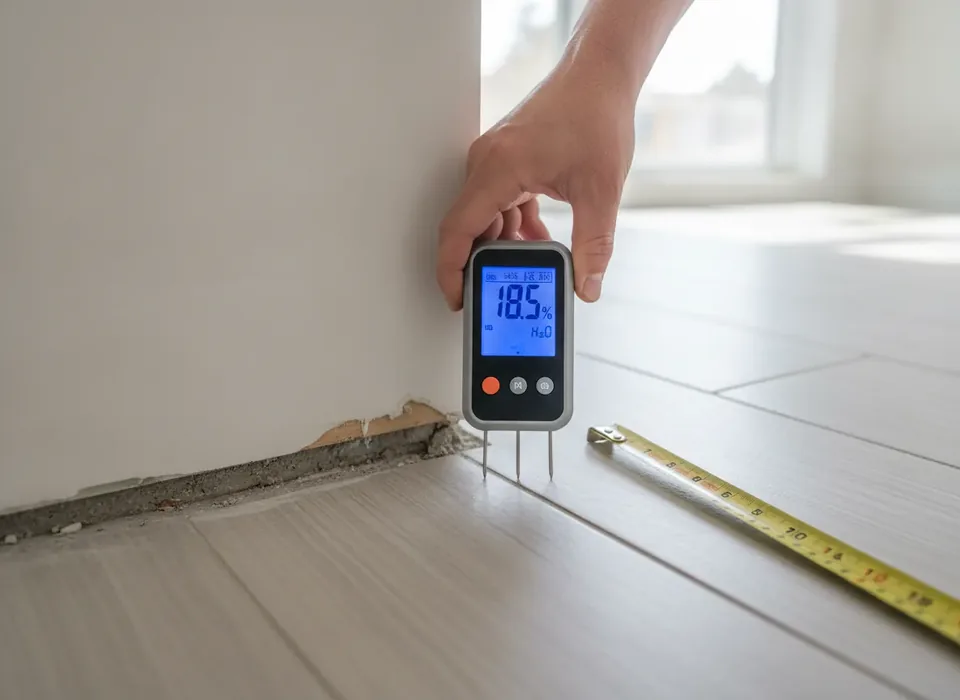
For a small clean-water spill caught right away, towels, fans and the AC may be enough. Once water has reached drywall, gone under tile or soaked carpet pad, rented fans rarely dry it fully, and hidden moisture can lead to mold. A moisture reading from a professional costs far less than a mold job later.
Do restoration companies charge more at night or on weekends?
Some do. National cost guides list after-hours call-out fees of about $50 to $200 and labor at $70 to $200 per hour. Others build it into the job. Ask when you get the quote whether an emergency or after-hours fee applies, and get it in writing before work starts.