
Monsoon Roof Leak & Ceiling Damage in Chandler, AZ
A monsoon cell can drop inches of rain in an hour and find every weak tile and seal on the roof. Describe the leak once, and independent restoration companies serving Chandler and the East Valley can reply with free quotes.
Get a Free Quote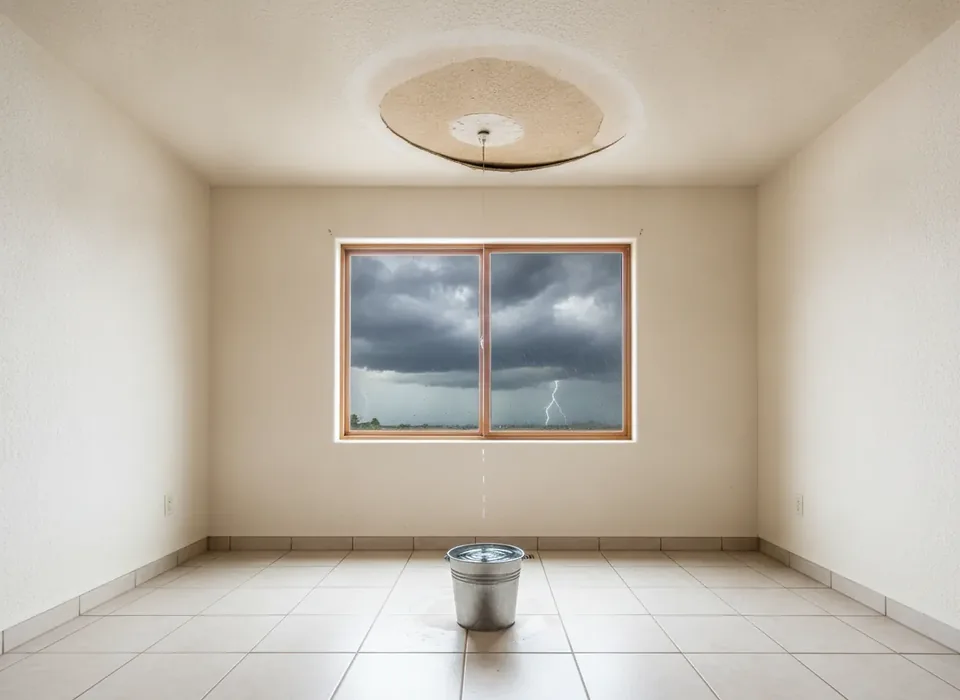
What happens first
Put a bucket under the drip and move furniture and electronics out of the way. If the ceiling is bulging, don't stand under it. A small hole poked at the lowest point of the bulge, with a bucket below, can let water drain before the drywall gives way. Only do this if you can reach it safely from a ladder. Turn off the breaker for any ceiling light or fan near the leak.
Take photos of the ceiling, the attic if you can safely look, and any roof damage visible from the ground. Then call Call (727) 300-6656 or send the form. Many restoration companies can arrange emergency roof tarping along with interior drying.
Monsoon season in Chandler
The National Weather Service defines Arizona's monsoon as June 15 through September 30, and the season can deliver 30–60% of the year's rain. It arrives in bursts. In July 2022, an East Valley storm brought winds near 60 mph, downed trees and flooded streets in Chandler, Gilbert and Queen Creek, with more than 2 inches of rain in under an hour reported. In October 2025, the remnants of two Pacific storms dropped 1.96 inches on Sky Harbor in a single day, one of the wettest October days on record. Big rain can come after September 30, too.
Most of that rain hits roofs that have baked all summer. A short burst with high wind drives water sideways under tiles and around flashings that would shed a gentle rain.
Where monsoon roof leaks start
Tile roofs. Concrete and clay tile is common on Valley homes, but the tile isn't the waterproof layer. The underlayment beneath it is. Rosie on the House notes that tile underlayment in Arizona lasts about 8–20 years, and one cracked or slipped tile lets monsoon water reach it. Fixing worn underlayment means lifting the tiles, replacing the underlayment and relaying them.
Flat and low-slope sections. Ponding water, clogged roof drains and blocked scuppers can push water through seams and parapet walls during a hard storm.
Penetrations. Plumbing vents, skylights, and the roof jacks under rooftop AC or evaporative cooler units have seals that crack in the heat.
From there, water soaks attic insulation, pools on the back of the ceiling drywall and shows up as a brown ring, a sag or a drip. Wet blown-in insulation holds water against the ceiling long after the storm passes.
What restoration companies do after a roof leak
The roof repair and the interior drying are separate jobs; many homeowners get quotes for both at once.
Stop more water
Emergency tarping or a temporary patch keeps the next storm out. This is the temporary repair your insurer expects you to make.
Check the attic
Wet insulation is pulled or dried, and the technician looks for water on framing, ducts and the top of the drywall.
Assess the ceiling
Ceiling drywall that sagged, softened or soaked through is usually cut out. Lightly stained, firm drywall can often be dried and sealed. In older homes, popcorn texture should be tested for asbestos before it is disturbed.
Dry the space
Dehumidifiers and air movers run in the room and sometimes the attic. Monsoon humidity can slow drying, so readings decide when it is done.
Repair and refinish
New drywall, texture and paint, plus the permanent roof repair, are done by ROC-licensed contractors.
Roof leak vs. flood: why coverage differs
This is the distinction that matters most after a monsoon storm. Rain that comes through the roof because wind or hail damaged it is often covered by a homeowners policy, though a leak blamed on worn-out underlayment may be denied as wear and tear. Water that rises from the ground, such as yard runoff over the threshold or street flooding, is flood. The City of Chandler notes that most homeowners policies don't cover flood. That takes a separate flood policy through the NFIP or a private flood insurer.
Chandler says several small areas of the city sit in the 100-year floodplain, generally next to canal banks and railroad embankments where water ponds. The city asks residents to report standing water at 480-782-3503. For your claim, write down how the water entered and photograph the roof and the yard. Ask your adjuster how your policy treats each source. More: monsoon roof leak: what to do.
HOA approval for roof repairs
Many Chandler neighborhoods, including master-planned communities like Ocotillo, have HOA design rules. Emergency tarping and interior drying shouldn't wait. For the permanent fix, submit a like-for-like roof, tile or exterior repair for design review. Arizona law (A.R.S. §33-1817) says associations may not unreasonably withhold approval and must give reasons. See HOA water damage: who pays.
What ceiling leak repair typically costs
Ceiling repair after a leak typically runs $325–$1,100. Drying a room with wet carpet is often a Class 2 loss at about $500–$1,000, and a soaked ceiling, walls and insulation can reach Class 3 at $1,000–$3,000. Roof repair is quoted separately by a roofer. Typical ranges from national cost guides (Fixr 2025, HomeAdvisor 2025); East Valley quotes vary. Run your numbers on the cost calculator.
When it is an emergency
- The ceiling is sagging or the drip is near a light fixture.
- Water is coming in at several spots, or more rain is forecast.
- Outside water is entering under doors (that is flood water, so treat it as gray or black).
- Attic insulation is soaked over a bedroom or kitchen.
Monsoon roof leak FAQ
Does homeowners insurance cover a monsoon roof leak?
Often, if wind, hail or a falling branch damaged the roof and rain got in. Leaks blamed on old, worn-out underlayment are more likely to be denied as maintenance. Water that rose from the yard or street is flood and usually needs a separate flood policy. Policies vary, so ask your adjuster how yours treats each source.
Should I wait for the storm to stop before calling?
No. Call during the storm so you're in the queue, because every restoration company and roofer gets busy at once. Meanwhile, catch the water, move belongings and turn off nearby lights. Don't go on the roof in wind, lightning or rain. Tarping can wait until it's safe; interior protection can start now.
Can a stained ceiling be saved?
Sometimes. If the drywall is firm, the stain is small and the attic insulation above is dried or replaced, the ceiling can often be dried, sealed with a stain-blocking primer and repainted. If it sagged, crumbled or stayed wet for days, it is usually replaced. A moisture meter reading settles it.
Do I need HOA approval to fix my roof after a storm?
For emergency tarping and interior drying, generally no; protect the house first. For the permanent repair, many HOAs require design review, even for like-for-like tile. Submit the request with photos and the roofer's scope. Under A.R.S. §33-1817, associations must not unreasonably withhold approval. For a dispute, ask an Arizona attorney.
Get free quotes for monsoon leak and ceiling damage
Tell the companies where the ceiling is wet, whether the roof is tarped, and whether outside water got in. Independent East Valley restoration companies reply with quotes.
Water where it shouldn't be? Get free quotes.
Tell us what happened and independent East Valley restoration companies can reply with no-obligation quotes.