
Slab Leak Water Damage in Chandler, AZ
A slab leak is one of the most common causes of hidden water damage in East Valley homes. Here is what it is, who fixes what, and how to get free quotes from independent restoration companies for the drying and flooring work.
Get a Free Quote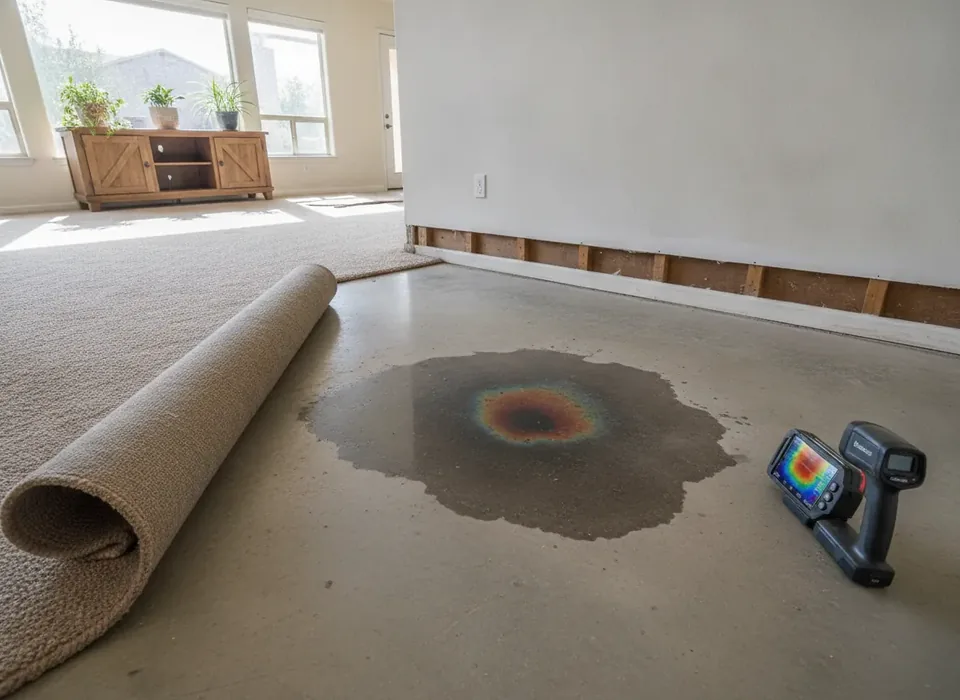
What is a slab leak?
A slab leak is a break in a water line that runs in or under the concrete slab your house sits on. Slab-on-grade construction is the norm in Valley tract homes, per local plumbers, and supply lines are often routed below the floor. When one of those lines fails, water spreads under the floor and comes up wherever it can: through grout, at the carpet tack strip, or at the bottom of a wall.
What to do first: if you suspect a leak, shut off the main and check whether the water meter still moves. If the dial stops, the leak is on your house side. Take photos of damp spots, then call a leak-detection plumber and a restoration company. You can call Call (727) 300-6656 or use the form below for the restoration side.
Signs of a slab leak
- A warm or hot spot on tile or carpet, which points to a hot-water line.
- Damp carpet or a musty smell with no visible source.
- A water bill that jumps without a change in use.
- The meter's leak indicator spinning with every fixture off.
- Hissing or running-water sounds when nothing is on.
- New cracks in tile or grout, or baseboards swelling at the bottom.
Slab leak in the garage
Garages show slab leaks in their own ways. Look for a dark patch on the concrete that comes back after it dries, damp drywall at the bottom of the shared wall with the house, or water at the slab edge near the water heater or softener lines. Garage floors are bare concrete, so a leak there is often spotted earlier than one under carpet. It can still spread under the slab into the house. The signs of a slab leak post covers more warning signs.
Who does what: plumber vs. restoration company
A slab leak is two jobs, handled by two kinds of licensed business.
The plumber finds and fixes the pipe. Slab leak detection uses acoustic listening gear, pressure tests and thermal imaging to pin the break to within a few feet. Repair can mean breaking the slab to fix the spot, rerouting the line through the attic or walls, or replacing under-slab plumbing. In Arizona that is plumbing work, done by an ROC-licensed plumbing contractor.
The restoration company deals with the water. It extracts water, removes wet carpet pad, baseboards and damaged drywall, sets drying equipment, monitors the slab with meters, and handles or coordinates flooring replacement. Flooring and drywall replacement are contracting work, so that company needs an ROC license too.
Order matters. Drying a slab while the line still leaks wastes days and money. The usual sequence is: detect, repair or reroute, then dry. Ask both companies to share findings so the restoration crew knows where the break was.
How restoration companies handle slab leak damage
A typical sequence once the plumber has repaired or rerouted the line.
Map the wet area
Meters and thermal imaging show how far water traveled under tile and carpet. Water under a slab often spreads well beyond the visible damp spot.
Open what holds water
Carpet and pad are pulled back, baseboards come off, and wet drywall is cut above the wet line. If a plumber broke the slab, that access hole is protected during drying.
Dry the concrete
Dehumidifiers and air movers run, sometimes with heat or drying mats on the slab. Concrete releases water slowly, so slab drying often takes longer than wall drying.
Confirm and rebuild
When readings match a dry reference area, flooring, baseboards and drywall go back. That rebuild is done by an ROC-licensed contractor.
Why slab leaks show up in East Valley homes
Plumbers in the Valley report a few repeat causes: expansive soils that shift the slab, hard-water scale on the inside of pipes, and copper lines that expand and contract with heat, with hot-water lines failing most often. Treat those as trade observations rather than settled science.
The water itself is hard. The City of Chandler reports a citywide average hardness of about 16.5 grains per gallon, and its 2025 water quality report lists 173–288 mg/L. Chandler's housing is also reaching middle age. The median home was built in 1997, and nearly three in four were built between 1980 and 2009. Homes that age often still have their original plumbing.
What slab leak work typically costs
| Item | Typical range |
|---|---|
| Slab leak detection (plumber) | $100–$400 |
| Slab leak repair (plumbing) | Average $2,500; typical $1,000–$4,000 |
| Break-and-repair at the slab | $500–$3,000 |
| Reroute or replace under-slab lines | $4,000–$15,000 |
| Clean-water extraction (restoration) | $3.75–$4.25 per sq ft |
Typical ranges from national cost guides (Fixr 2025, HomeAdvisor 2025); East Valley quotes vary. Drying, tear-out and new flooring are priced separately from the plumbing. See slab leak repair cost for the plumbing side and the cost guide for restoration.
Does insurance cover a slab leak?
It depends on the policy and on how long the leak ran. Many homeowners policies treat the resulting water damage from a sudden break differently from the pipe repair itself. Gradual leaks and long-term seepage are commonly excluded. Some policies pay for tearing out and replacing the floor needed to reach the pipe; others don't. Read your declarations page, call your adjuster and keep the plumber's detection report. More detail: does homeowners insurance cover slab leaks in Arizona.
When a slab leak becomes an emergency
Most slab leaks are slow, but act the same day if water is pooling on the floor, if a hot spot is growing, if water is reaching wall bottoms in several rooms, or if you can't shut the water off. Close the main, and if it is a hot-water line, turn off the water heater's gas or power too.
Slab leak FAQ
What is slab leak detection, and who does it?
Slab leak detection is how a plumber locates a break under concrete without tearing up the whole floor. Common tools are acoustic listening devices, line pressure tests and thermal cameras. National cost guides list detection at about $100–$400. In Arizona this is plumbing work, so hire an ROC-licensed plumber; a restoration company handles the water damage afterward.
Can a restoration company dry the floor before the leak is fixed?
It can extract standing water and start removing wet carpet pad, but full drying usually waits for the repair. If the line keeps leaking, the slab keeps getting rewetted and the meters never reach a dry reading. Many homeowners schedule the plumber and the restoration company on the same day so the drying starts right after the repair.
Will they have to tear up my tile?
Not always. If the plumber reroutes the line through the attic or walls, the slab may not need to be opened. Tile over a wet slab can often stay if it is well bonded and the slab dries. Tile is removed when the slab must be broken for a spot repair, or when tiles are cracked or loose.
How long does a slab take to dry?
Concrete gives up water slowly. A small, quickly caught leak may dry in several days with dehumidifiers. A leak that ran for weeks under carpet can take longer, especially in monsoon humidity. The restoration company should take daily readings and compare them to a dry part of the slab before any flooring goes back down.
Is a slab leak in the garage a problem?
Yes. Even though garage concrete is bare, a leak there wastes water, can undermine the slab edge, and can spread under the wall into the house. Look for a damp patch that returns, wet drywall at the base of the house wall, or water near the water heater lines. Shut off the main and call a leak-detection plumber.
Get free quotes for slab leak water damage
Tell the companies where the floor is wet, whether a plumber has found the leak, and what flooring you have. Independent East Valley restoration companies reply with quotes.
Water where it shouldn't be? Get free quotes.
Tell us what happened and independent East Valley restoration companies can reply with no-obligation quotes.