
Emergency Water Extraction in Chandler, AZ
Water is on the floor and spreading. Tell us what happened once, and independent, ROC-licensed restoration companies serving Chandler and the East Valley can reply with free quotes. Most providers typically offer 24/7 emergency response.
Get a Free Quote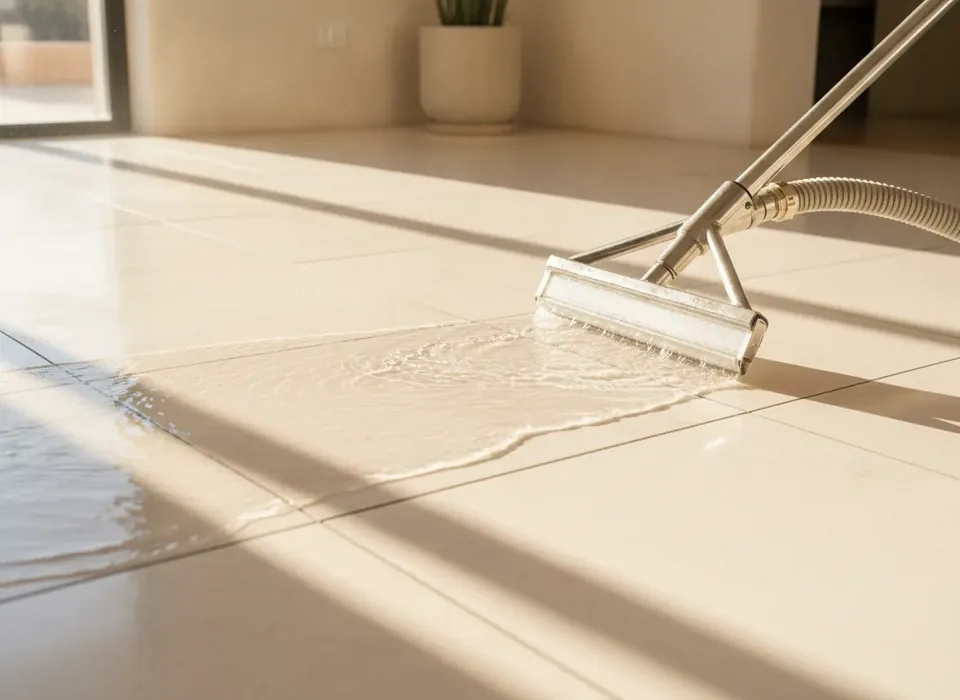
What happens first
Water moves fast on tile. In a single-story home it runs under baseboards, into the bottom of drywall and beneath cabinets within minutes. The goal of the first hour is narrow: stop the source, protect yourself, and get the bulk water out before it wicks into walls.
Do these four things now. Close the main shutoff. In many Chandler homes it is usually near the front hose bib or in the garage. Switch off breakers for any room with wet outlets or cords. Take photos and video of every wet surface before anything is moved. Then call Call (727) 300-6656 or send the form below.
Chandler Water Damage Pros is a free referral service, not a restoration company. The businesses that reply are independent. You compare their quotes and decide, with no obligation.
What the restoration companies do on an extraction call
Details differ by company. Ask the one you hire to put the plan in writing.
Confirm the source and the hazards
The technician checks that the water is off, looks for live electrical and slick floors, and decides whether the water is clean, gray or black. That category drives safety gear and price.
Pull out standing water
Truck-mounted or portable extractors lift water off tile, carpet and pad. Squeegees and wands move water out of grout lines and from under kick plates, where it hides on slab floors.
Find where it went
Moisture meters and often a thermal camera trace water into walls, cabinets and the next room. The goal is a map of every wet area, not a guess.
Remove what will not dry
Saturated carpet pad, swollen laminate, soaked baseboards and the wet bottom of drywall often come out. Tear-out is contracting work in Arizona, so it belongs with an ROC-licensed company.
Start drying
Air movers and dehumidifiers go in based on the readings. The structural drying phase removes the water you cannot see.
Extraction in Chandler homes: what is different here
Most emergencies in Chandler start inside the house: a split supply line under a sink, a failed water heater in the garage, a washing machine hose, or a clogged AC drain in the attic. Outside water arrives mainly in monsoon season, which the National Weather Service defines as June 15 through September 30. In August 2021 the Chandler Municipal Airport gauge recorded 2.72 inches of rain in six hours, enough to push water under patio doors and through weep screeds.
Houses here are mostly single-story stucco built on concrete. Census data shows about 73% of Chandler housing was built between 1980 and 2009, with a median year built of 1997. That puts many homes at the age when original water heaters, supply lines and shutoff valves wear out. Large-format tile is common, and tile hides water well. Grout lines wick it sideways, and the slab underneath holds it long after the surface looks dry.
Desert air helps once equipment is running. During monsoon months, though, indoor humidity rises and drying slows. If water came up from below the floor rather than from a pipe you can see, read the slab leak page before anyone starts drying, because the leak has to be fixed first.
What emergency extraction typically costs
Extraction is usually priced per square foot, by water category:
| Water category | Typical range per sq ft |
|---|---|
| Clean water (supply line, water heater) | $3.75–$4.25 |
| Gray water (washer, dishwasher, AC drain) | $4.10–$6.50 |
| Black water (sewage, outside flood water) | $7–$7.50 |
Typical ranges from national cost guides (Fixr 2025, HomeAdvisor 2025); East Valley quotes vary. Labor runs about $70–$200 per hour, and an after-hours call-out often adds $50–$200. A whole job with drying and minor repairs typically lands between $1,200 and $5,000. Use the calculator on the Chandler cost guide to rough out your own numbers.
Insurance and paperwork
A sudden, accidental discharge, such as a burst line or a failed water heater, is the kind of loss most homeowners policies are written to cover. Water that seeped for weeks and flood water that rose from outside are usually excluded. Your policy's deductible applies either way.
Arizona's Department of Insurance and Financial Institutions (DIFI) advises homeowners to make temporary repairs, keep every receipt and hold off on permanent repairs until the insurer has inspected. Emergency extraction counts as temporary mitigation. If a company asks you to sign an assignment-of-benefits form, read it carefully before signing. For coverage questions, ask your adjuster. The Arizona insurance claims guide covers the timelines.
Is it an emergency?
Treat it as one if any of these are true:
- Water is still running and you cannot find or close the shutoff.
- Water is near outlets, the electrical panel or a ceiling light.
- More than one room is wet, or water has reached carpet in a second room.
- The water is gray or black, from a drain, toilet, washer or outside.
- Nobody can stay home to watch it, such as a seasonal or rental property.
For a step-by-step view, see the first 24 hours after water damage and the full restoration process.
Emergency extraction FAQ
How soon can a restoration company get to a Chandler home?
It depends on the company, the time of day and the weather. Many East Valley providers typically offer 24/7 emergency response, but we don't guarantee arrival times. During a monsoon storm every crew is busy. While you wait, keep the water off, mop or wet-vac what you can, and move furniture and rugs off wet floors.
Can I just use a shop vac and fans?
For a small clean-water spill on tile that you caught right away, often yes. For water that reached carpet pad, walls, cabinets or a second room, fans alone usually dry the surface and leave the slab and wall cavities wet. A moisture meter reading is the only reliable way to know the water is gone.
Who do I call first, a plumber or a water damage company?
If water is still flowing and the shutoff will not close it, call a plumber first. If the water is off, call a restoration company first, because each hour of standing water adds drying time. Many homeowners call both. The plumber fixes the failed part; the restoration company removes the water and dries the structure.
Will my tile floor have to come up?
Usually not. Porcelain and ceramic tile on a slab typically survive clean-water losses once the grout and slab are dried. Tile comes up more often when water sat under it for days, when a slab leak needs access, or when the water was sewage. Laminate and engineered wood over a slab are more likely to be replaced.
How do I check that a company is licensed?
Look up the company's name or license number on the Arizona Registrar of Contractors site at roc.az.gov. Arizona requires licensees to show "ROC" and their number on bids and ads, so ask for it if you don't see it. Many companies are IICRC-certified as well; ask which certifications the crew holds.
Get free extraction quotes in Chandler
Say what is wet, how it started and whether the water is off. Independent East Valley restoration companies reply with no-obligation quotes.
Water where it shouldn't be? Get free quotes.
Tell us what happened and independent East Valley restoration companies can reply with no-obligation quotes.