
How Long Does Water Damage Drying Take in Arizona?
"How long until my house is dry?" is usually the second question after "who do I call?" The answer in the East Valley depends heavily on the month. Desert air is often very dry, which helps. Monsoon season brings humid air that slows drying down. And some materials, especially the concrete slab most Valley homes sit on, hold water much longer than they look like they do.
This guide explains what controls drying time, what "dry" actually means to a restoration company, and how monitoring works, so you can follow along and know when it is reasonable to pull the equipment.
How long does water damage take to dry?
There is no honest one-number answer. A small clean-water spill caught quickly, in a dry month, may wrap up its drying phase within a few days. A leak that ran overnight into walls, cabinets and tile over slab can take a week or longer, and a heavy monsoon loss with high indoor humidity longer still. What a good company can promise is not a date but a process: take readings, set drying goals, and check every day until the goals are met.
The factors that move the timeline:
- How much water, and how long it sat. Water wicks up drywall and spreads under baseboards and flooring over hours.
- What got wet. Carpet and pad dry quickly or get replaced. Drywall is moderate. Wood, cabinets, plaster and concrete are slow.
- Category of water. Clean supply-line water can often be dried in place. Sewage (Category 3) usually means removing porous materials rather than drying them. See sewage backup cleanup.
- Class of loss. The industry grades the evaporation load from Class 1 (a small area, little absorbed) to Class 4 (dense materials like concrete, hardwood or plaster that need specialty drying). Higher classes take longer and cost more.
- The air in the house. This is where Arizona is different.
Dry desert air vs monsoon humidity
Drying is evaporation. Air movers pull moisture out of wet materials into the air, and dehumidifiers pull it out of the air. The drier the air, the faster materials give up water. For much of the year, low humidity in the Phoenix area works in a homeowner's favor.
The monsoon, defined by the National Weather Service as June 15 through September 30, changes that. Local restoration companies report outdoor relative humidity commonly running around 50–70% during monsoon storms. Humid air holds less additional moisture, so drying slows and dehumidifiers work harder. Monsoon losses also tend to come in clusters, when a storm hits many homes at once, so equipment and crews may be stretched.
Heat has its own trap. With 110°F outside, a wall can feel dry to the touch while the inside of the cavity, the bottom plate or the slab under tile is still wet. Surface feel is not a measurement. Hidden moisture is how mold gets started: Ready.gov and the EPA are widely cited as saying mold can begin growing within 24–48 hours on damp materials. See mold after water damage.
Keep the AC running
Leave your air conditioning on during drying, set to a normal comfortable temperature, unless the restoration company tells you otherwise. Air conditioning removes moisture from the air and keeps the house livable while air movers run. Keep windows closed during humid monsoon weather, since outside air may be wetter than the air indoors. Don't switch off or move drying equipment on your own. Ask first.
What does "dry" actually mean?
Restoration companies don't call a room dry because it looks dry. They set a drying goal for each material, usually based on readings taken from unaffected parts of the same house. Undamaged drywall in a bedroom down the hall shows what normal looks like in your house. Wet drywall is dry when it reads close to that reference.
Typical steps:
Moisture mapping
On the first visit, technicians use moisture meters and often thermal cameras to trace how far the water travelled, marking wet areas on a sketch or in photos.
Reference readings
They take readings from dry, unaffected materials to set goals for drywall, wood, subfloor and concrete.
Equipment placement
Air movers, dehumidifiers and sometimes specialty drying mats or wall-cavity systems, sized to the room and the class of loss.
Daily monitoring
Each visit records material readings, room temperature and humidity, and dehumidifier output. Equipment gets moved or added as areas dry.
Sign-off
When every material meets its goal, the equipment comes out and the job moves to repairs. That moisture log becomes part of your insurance file.
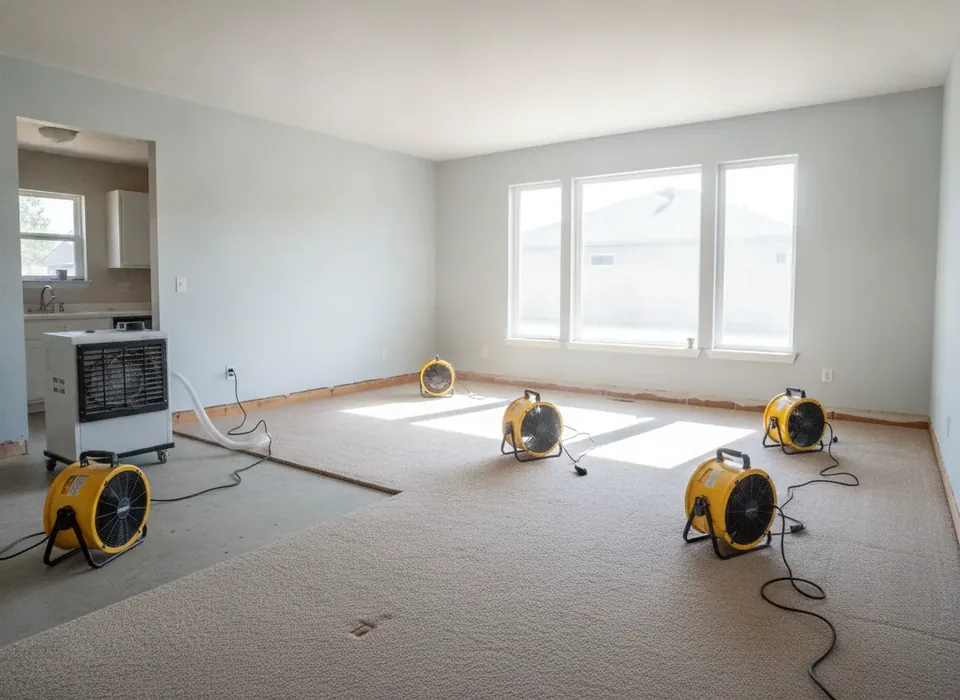
Why slab-on-grade homes take longer
Slab-on-grade construction is the norm in Valley tract homes, according to local plumbers and restoration companies. Concrete absorbs water slowly and releases it slowly. When tile sits on the slab, water can sit trapped under it, and when carpet pad gets soaked over concrete, the slab beneath often stays wet after the pad is gone. That is why slab leaks and long-running leaks often take more drying days than a fast spill of the same size. The slab leak water damage page covers the plumber-plus-restoration side of that job.
How to tell if drying is going well
- Ask to see the readings each day, or for a copy of the drying log. Numbers should trend toward the goals.
- Dehumidifiers should be collecting water, more at first and less as materials dry.
- A musty smell that gets stronger instead of fading is worth raising right away.
- Equipment should change over time. As some areas dry, units get moved to slower spots or removed.
- No date promised up front is normal. A company that guarantees a finish date before taking readings is guessing.
Does drying time change the cost?
Yes. Equipment is typically billed per day, so more drying days means a bigger line item, and monitoring visits add labor. National guides put Class 1 jobs around $150–$400 and Class 3 jobs at $1,000–$3,000, with a typical whole job around $1,200–$5,000 (Fixr 2025; HomeAdvisor 2025). East Valley quotes vary. Starting fast is the most reliable way to keep the drying shorter. The Chandler cost guide has a planning calculator, and the structural drying page explains the equipment.
When you're ready, describe the leak once on the free quote form. Independent East Valley restoration companies, many IICRC-certified (ask), will reply. Providers typically offer 24/7 emergency response, which matters most in the first day.
Questions people ask
How long does it take to dry water damage in Arizona?
It depends on how much water, what got wet, and the indoor humidity. Small clean-water losses in a dry month may finish drying within a few days. Larger losses, slab and tile, or monsoon humidity can stretch it to a week or more. Daily moisture readings, not a calendar, decide when it's done.
Does dry Arizona air help water damage dry faster?
Usually. Low humidity speeds evaporation. During the monsoon, June 15 through September 30, humid air slows drying and dehumidifiers have to work harder.
Should I turn off my AC during water damage drying?
Generally no. Air conditioning helps remove moisture and keeps the home livable. Follow the restoration company's instructions for your setup.
Can I turn off the fans before the company says it's dry?
It's best not to. Materials can feel dry on the surface while still wet inside, and stopping early raises the risk of mold. Ask the company to show you the readings.